Field guide / Container capacity
Dumpster Sizes for Florida Projects
Compare dumpster sizes before you call. We help you balance room for debris, material weight, and the space needed to deliver a container safely.
Dumpster sizes: 10, 15, 20, 30, and 40 yards
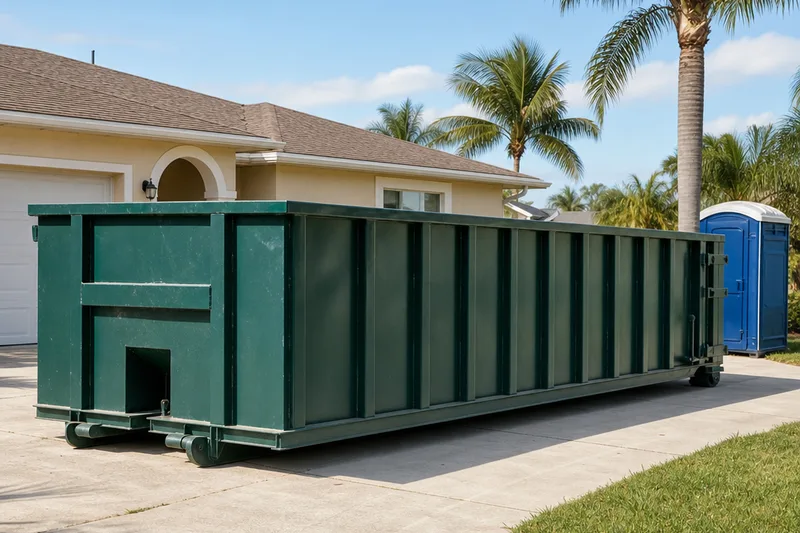
The yard rating describes volume, not an unlimited weight allowance. Use this table as a starting point for a conversation about your load. A project label alone cannot establish the right size, because two similar renovations may produce very different materials.
| Capacity | Typical dimensions | Projects to discuss | Key consideration |
|---|---|---|---|
| 10 yard | About 12 x 8 x 3.5 ft | Small cleanout or limited remodeling | Less room for bulky items |
| 15 yard | About 16 x 8 x 4.5 ft | Flooring removal or modest renovation | Check material density |
| 20 yard | About 22 x 8 x 4.5 ft | Household cleanout or remodeling | Balance volume with weight |
| 30 yard | About 22 x 8 x 6 ft | Larger renovation or construction cleanup | Allow for loading height |
| 40 yard | About 22 x 8 x 8 ft | Large-volume debris and property cleanup | Plan access and loading carefully |
These measurements are approximate. Ask about the actual available container before relying on the table for a tight placement. The delivery truck needs additional working room beyond the footprint of the box.
Describe what is going inside
Furniture and other bulky contents can fill a container quickly without being especially dense. Building materials can produce a heavy load while leaving visible space. Do not solve every heavy-material problem by choosing a bigger dumpster; first discuss the allowed material and loading limits.
Make a short list of the main debris types before you call. Tell us if the load will be mixed and whether you expect anything uncertain or restricted. We use that description to discuss capacity and disposal, rather than treating every cubic yard as the same kind of waste.
Keep hazardous waste, paint, solvents, tires, batteries, propane tanks, and refrigerant appliances out. If an item needs separate handling, leave it out of your capacity estimate for the ordinary dumpster and ask how to plan around it.
Make room for delivery and loading
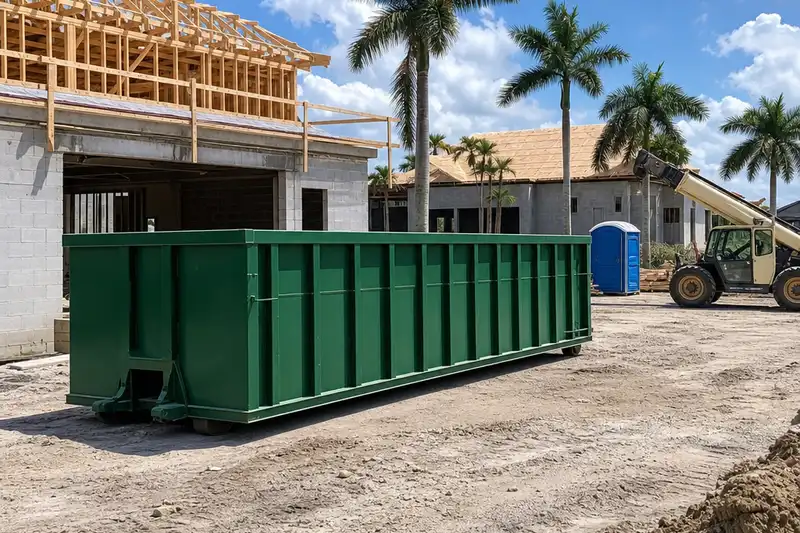
Measure the placement area, then look at the route leading to it. Gates, parked vehicles, overhead obstructions, and tight turns can matter as much as the final space. Explain the access conditions when you call instead of waiting for delivery day.
A lower container can be easier to load by hand, while a taller container offers more volume. Think about how debris will reach the container and keep the work area practical. Do not stack material above the container edge or block the route needed for pickup.
Check HOA rules and property permission for private placement. Public-space permit requirements vary by city. Our Tampa dumpster guide explains that city's right-of-way planning, but do not apply its rules to every Florida address.
Questions to ask about the rental
Confirm the included weight, rental period, pickup arrangements, and any circumstances that can add charges. Explain if the job may last longer or generate more debris than expected. Knowing how changes are handled is more useful than selecting a container from a picture alone.
If you are still between sizes, describe the work in plain language. We can discuss the tradeoff between too little space and a container that is unnecessarily difficult to place. Availability, exact equipment, price, and dates are confirmed by phone.
Choose the size around the actual job.
Have your address, debris list, and dates ready. A measurement of the entrance and placement area is helpful too. Use the quote preparation helper if you want a short checklist before calling.
Call (754) 360-0055